by Diamond Crown & Brow www.diamondcb.com
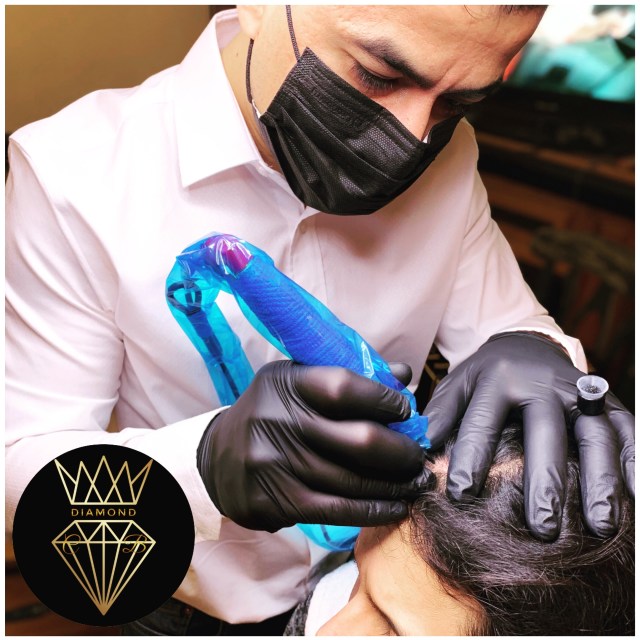
SMP or Scalp Micropigmentation is a safer alternative and less expensive than Hair transplants. SMP is another form of a tattoo similar to semi-permanent makeup. SMP technicians utilize the pigmentation or “dot clusters” technique to apply ink just below the skin or epidermis, in a similar manner to traditional tattoos by using a tattoo machine.
The pigmentation technique consists of applying ink in a dot pattern by way of a tattoo machine creating an appearance similar to hair follicles. Since the tattoo is applied to the epidermis, where the skin is constantly being remade, after time SMP will need to have a “touch up” or enhance the tattoo pigmentation.
What should I consider before I commit to SMP?
- What type of equipment is being used?
- Cost difference between SMP and Hair transplants
- Health Factors to be aware of
- Age factors
- Healing process and long it lasts
- After Care and touch ups
What type of equipment do they use?
SMP or Scalp micropigmentation uses a standard tattoo machine
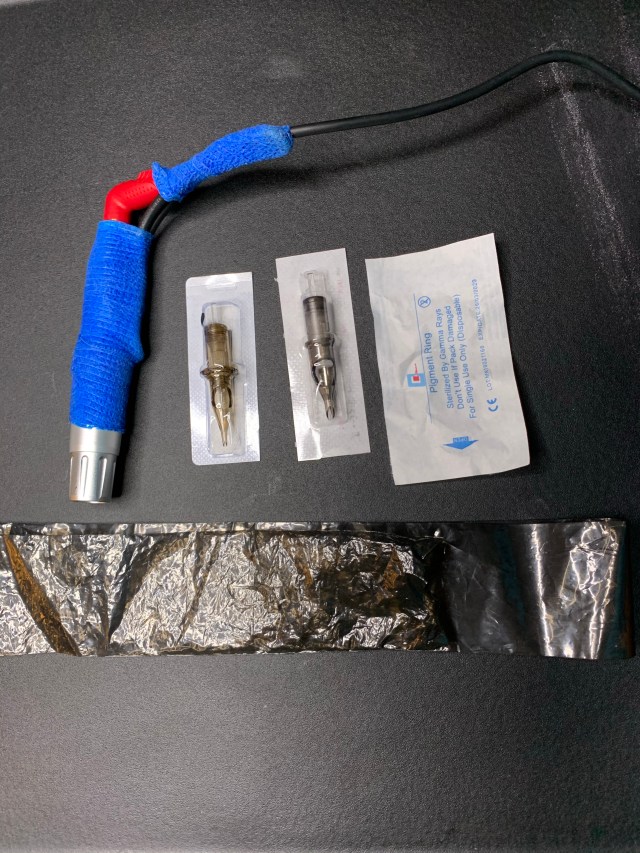
The needle used is typically 3 round Needle or 3r
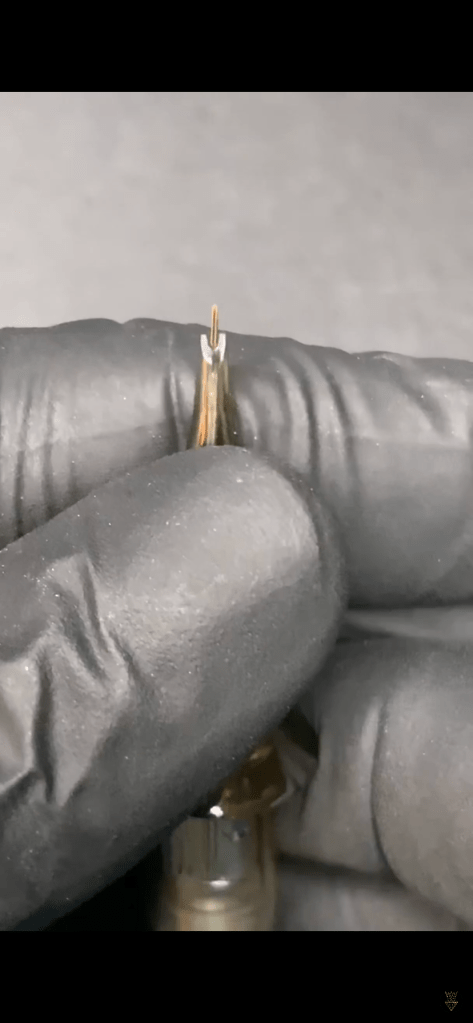
Technique used:
Cost of SMP vs Hair Transplant?
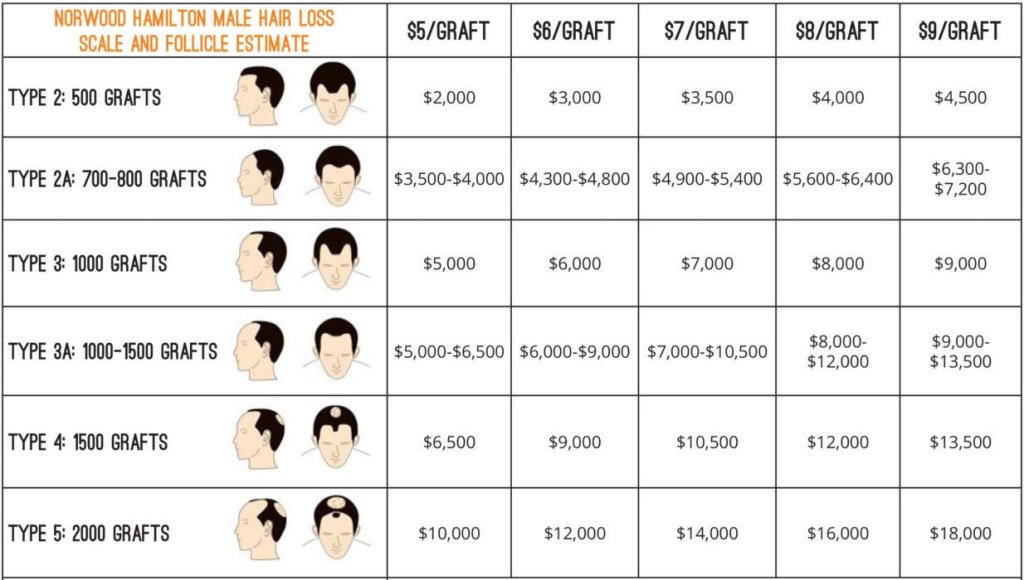
Hair Transplants are depending on the amount of grafts needed. As seen below this is the cost of an average Hair Transplant.
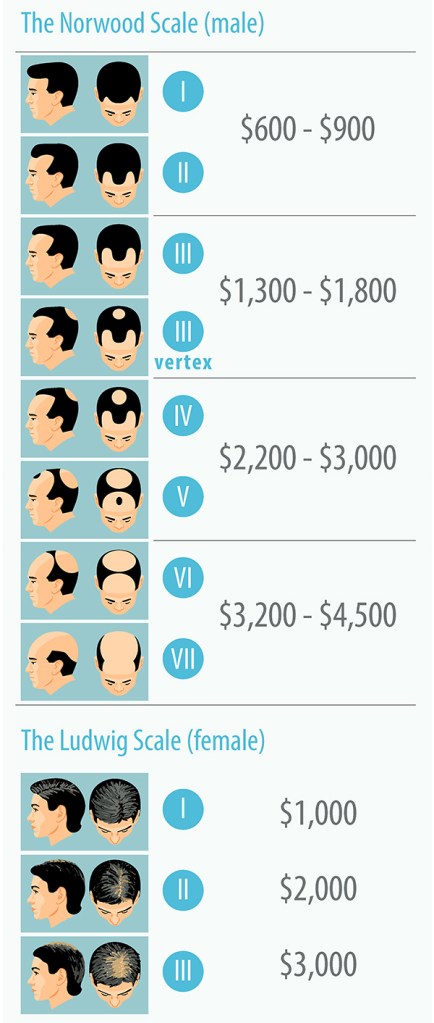
SMP or Scalp Micropigmentation is dependent of the area needed. As seen below this is the average of cost for SMP.
Health Factors to consider
Contraindications – You are NOT a candidate for micropigmentation if any of the following apply to you:
• Pregnancy
• Nursing
• Diabetes Type 1
• Lupus
• Hepatitis B/C
• AIDS
• Active Skin Disorders: Cold Sores, Shingles, Impetigo, Psoriasis, Pink Eye, SunBurn, Severe Acne
• Active Vitiligo
• Severe Rosacea
• Blood Disorders: Sickle Cell, Hemophilia
• Keloid Formation
• Mental Disorder
• Accutane (must be off for 6 months)
• Steroids (must be off for 6 months)
Restrictions –
• Retinol/Retin-A must be discontinued 7 days prior to procedure. (It will cause the skin to bleed).
• Injections (Botox, Radiesse, JuvaDerm, Voluma, etc.) must be done 2 weeks before or 2 weeks after the procedure.
• Chemical peels and laser treatments may not be done within 60 days before or after procedure.
• The use of Latisse® must be discontinued at least 3 months prior to your eyeliner procedure (it creates an inflammatory response, causes excess bleeding and prohibits the eyeliner from healing well).
• Sunburned or Suntanned skin is damaged skin and therefore will cause excessive bleeding.
**We CANNOT work on sunburned or suntanned skin.
• You cannot expose the area to the sun for 30 days before or after procedure.
• Do not schedule this procedure within one week prior to a water vacation.• Stay out of steam rooms, saunas, hot yoga, swimming pool, etc. for one week following procedure.
• Avoid working out or sweating for 1 week post procedure. (sweat will prevent pigment from healing into the skin)
• Avoid alcohol and caffeine 1 day before the procedure to minimize any oozing, bleeding or swelling.
• Do not take aspirin, ibuprofen, niacin, fish oil or vitamin E 3 days prior to procedure unless medically necessary.
1- 2 weeks Before the Treatment:
Do not take Aspirin, Niacin, Vitamin E or Ibuprofen 72 hours before.
Do not drink coffee, alcohol or energy drinks on the day of treatment.
If you tint your brows, do it 1-3 days prior to treatment
Do not tan or sunbathe 1 week before treatment.
You must complete any waxing at least 2 days before the treatment.
No chemical peels, dermabrasion, mesotherapy or any other intense treatments. This will cause skin cells to rejuvenate faster which will result in skin irritation. We recommend any of these to be done 2-3 weeks before Scalp Micropigmentation/SMP/Sar Blending.
Fix and/or wash your hair before the treatment. You will not be able to have direct contact with water on the area for 10-14 days.
Possible Risks, Hazards, or Complications
Asymmetry: Every effort will be made to avoid asymmetry, but most faces are not symmetrical so adjustments may be needed during the follow-up session to address any unevenness.
Excessive Swelling or Bruising: Some people bruise or swell more than others. Ice packs may help reduce the swelling. The swelling or bruising typically disappears in 1-5 days. Most people don’t bruise or swell at all.
Anesthetics: Topical anesthetics are used to numb the area to be tattooed. Lidocaine, Prilocaine, Benzocaine, Tetracaine, and/or Epinephrine cream and/or liquid are used. If you are allergic to any of these, please inform me now.
MRI: Because pigments used in Permanent Cosmetic procedures contain inert oxides, a low level magnet may be required if you need to be scanned by an MRI machine. You must inform your MRI Technician of any tattoos or permanent cosmetics.
Allergic Reactions. Although rare, allergic reactions to the color pigments my occur. If client has sensitive skin or particular concerned about an allergic reaction to the pigment or procedure, Diamond Crown & Brow LLC will do a test patch upon request.
Granulomas. These are small bumps that could form around the foreign matter ( colorant / pigment )
Infection. Diamond Crown & Brow LLC. only uses brand new sterile needles and sterilized instruments for every clients and procedure, DCB LLC. also follows all Idaho Health Regulations and keep current to all universal precautions including wearing the proper personal protective equipment. Skin infection could also occur from improper after care and post op instructions. It is imperative to follow the after care and post op instructions.
Keloid formation. Depending on your skin type you may be at risk for forming these scars after the treatment. If you scar easily this could apply to you
Removal complications. Like traditional tattoos, the treatment is permanent in nature and although it can be reversed, the marking can be difficult and costly to remove, and the success of the reversal cannot be a guarantee.
Hyper/hypo Pigmentation or Uneven Pigmentation:
This can result from poor healing, infection, bleeding, or many other causes. Your follow-up appointment will likely correct any uneven appearance.. Following the treatment there may be hyperpigmentation or hypopigmentation ( Lightening/ Darkening of the skin). Although these reactions are not very common, there is a possibility they can occur
Does it matter how old you are?
SMP longevity can range from 6 months to years before needing a touch up.
Usually the good rule of thumb is the younger you are the chances of needing more touch ups increase due to the fact of skin cells being replaced by the body. The older you are the less you will need but the skin does start to become less elastic and could possibly change the look of the SMP and will need a few touch ups.
Does SMP Hurt?
There is a very mild discomfort to the procedure but not unbearable. SMP is a very light handed tattoo.
Most tattoos require shading and retracing the lines to get the art to come alive.
SMP doesn’t require that at all. In fact its a pin point dot method evenly spaced from other little follicles. This is so that SMP matches the spacing of the follicles to create a more fuller affect to the Scalp.
After Care/ Post OP Instructions
After care is very important in order to achieve a beautiful and lasting results.
***Do not touch the healing pigmented area with your fingers, they may have bacteria and can cause an infection.
Apply antibiotic ointment or if you have no allergic reactions to Tattoo Goo 3-5 times daily until the procedure area has healed. Always use a clean cotton swab and not your fingertips
What to avoid?
-No make up, sun exposure, soap or shampoo, saunas, Jacuzzi, swimming in chlorine pools or in recreational bodies of water, contact with animals, gardening for 7-10 days,
-Before bathing, gently apply a light coating of Tattoo Goo
-Do not rub or traumatize the treated area while it is healing. You could remove the pigments as area is healing
-Once the area is complete and healed use a “total Sun Block”
**Do not use products that contain AHA’s on the treated area.( Examples: Glycolic, Lactic Acids. Malic acid, citric acid, and tartaric acid.) Always check the product labels. These AHA’s will fade the pigment color. AHA-Alpha-hydroxy acids (AHAs) are a group of plant and animal-derived acids used in a variety of skincare products. These include daily anti-aging products, such as serums, toners, and creams, as well as occasional concentrated treatments via chemical peels.
**If you are a blood donor or a plasma donor, you may not give blood or plasma for 1 year following your procedure.
All Follow up appointments/Sessions must be scheduled and completed.
What’s it suppose to feel like after the procedure?
If you experience any itching, swelling, blistering, or any other complications post procedure, stop using the product and call your technician. You may be allergic.
If you have excessive redness, swelling or tenderness or any red streaks going from the treated site toward the heart, elevated temperature, purulent drainage from the treated site, contact your physician as the area may be infected and you may need to seek medical care.
Failure to follow these instructions may result in pigment color loss.
Healing Process and Touch-Ups:
If you keep your scalp clean and dry, only a thin film (not a scab) will appear after 4-7 days. It will peel off itself in 7-10 days (do NOT peel it off). After the film peels off you can still feel some dryness, in this case clean or disinfect the area with a small amount of coconut or grapeseed oil. Be careful with any cleaning in the affected area. The full healing period is 28-45 days.
If there is any contact with water, sebum or sweat, the wound will expand and cause a scab. The scab will result in itching and peeling of the pigment. If you scratch the scab, a scar or white spot can appear and no pigment will be left.
If you have an old tattoo
Note that Scalp Micropigmentation/SMP/Scar Blending will NOT fully cover your old tattoo. It will still likely be visible through the Scalp Micropigmentation/SMP/Scar Blending. Only another “blocky” procedure, like a scalp tattoo, may cover what you already have.
What is the process and how many sessions?
The procedure will require a minimum of two sessions possible three sessions per area. For example, if we split the head in four sections and label them 1-4, section 1 will need two sessions possible three. The number of sessions required will be dependent on the Client’s Skin type, hair tone, and reaction to the colorants.
Sessions normally range from 1-2 hrs per session. Even though we can work longer than 1-2 hrs, it depends mainly on the clients and technicians.
How Often will I need to touch up the SMP?
It all depends on you and your skin. There are many things that contribute to the touch-ups. Some of the issue is after care , Skin type, age, and how active you are.
Many things can affect SMP, from sweating to aging and sun exposure. But do not let that stop you being who you are. SMP with proper home care and after care it usually can last up to 2 years or more.
Touch-ups
Touch ups are mainly for you to keep the integrity of the follicle appearance. After years of no touch up the SMP will fade and or blend into the skin for a light skew grey. Touch up are mainly to keep up with integrity of the SMP.
Needing a touch up months or years later. A touch up may be needed 6 months to 2 years after the touch up procedure depending on your skin, products you use on your skin,medications, sun exposure, etc.
The Touch Up must be scheduled 5-10 weeks after the first session and every 6 months to 2 years to keep them looking fresh and beautiful. There will be a charge for any touch up sessions after 10 weeks.
Failure to follow after care instructions
**Failure to follow after care instructions may result in infections, pigment loss or discoloration. Everyone’s skin heals differently. It is important to remember that this is a two-part process and the second touch-up will complete the procedure. The touch-up is recommended between 5-10 weeks.
Not everyone, but some people will need a touch-up to fill in missing hairs, make hair longer or achieve a more intensive color. After you have fully healed, you will see the finished result. Please be patient and don’t panic.
For your free Consultation go to www.diamondcb.com or click on Diamond Crown & Brow
 Local Loyal Clients' Blogs